Understanding Your Fertility Window
When you time intercourse matters more than most people realise. Here's how ovulation works and how to find your most fertile days.
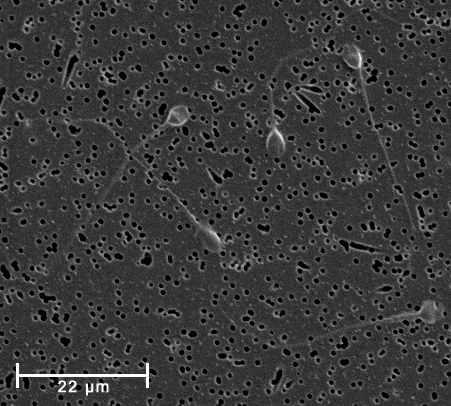
Every month, the ovary releases a mature egg in a process called ovulation. That egg survives for only about 12 to 24 hours. Sperm, on the other hand, can live inside the female reproductive tract for up to five days. Put those two facts together and you get the "fertile window": roughly the five days leading up to ovulation plus ovulation day — about six days in total when conception is actually possible.
In a textbook 28-day cycle, ovulation happens around day 14. But very few women are textbook. Cycles commonly range from 24 to 35 days, and the timing of ovulation shifts accordingly. This is why advice to simply "have intercourse on day 14" so often misses the mark. What stays relatively constant is the second half of the cycle (the luteal phase), which usually lasts about 14 days after ovulation.
There are several practical ways to identify your fertile window. Tracking your cycle length over a few months gives a rough estimate. Ovulation predictor kits detect the surge in luteinising hormone (LH) that precedes ovulation by 24 to 36 hours. Changes in cervical mucus — which becomes clear, slippery and stretchy, like raw egg white, around ovulation — are another reliable, free sign. Basal body temperature rises slightly after ovulation, which confirms it happened but is less useful for predicting it in advance.
For couples trying to conceive, having intercourse every one to two days during the fertile window offers the best chance each cycle. There is no need to "save up" — regular ejaculation actually keeps sperm quality at its best.
Age is the single most important factor influencing fertility. A healthy woman in her early twenties has roughly a 25% chance of conceiving in any given cycle; by the late thirties that figure falls considerably, and egg quality declines alongside quantity. This is normal biology, not a personal failing.
As a general guide, if you are under 35 and have been trying for 12 months without success — or six months if you are 35 or older — it is worth seeking a fertility evaluation. Coming in earlier is never wrong, especially if your cycles are irregular or you have a known condition such as PCOS or endometriosis. Understanding your window is a powerful first step; knowing when to ask for help is the next.
“Conception is only possible on about six days each cycle — the five days before ovulation and the day of ovulation itself.”
— Dr. Milind B. Patil